For Healthcare Professionals

Mother’s own milk is a superfood that promotes optimal growth and development. Human milk is species specific and contains thousands of immune factors, including antibodies, that are not found in formula (Kim & Froh, 2012). When mother’s own milk is not available there are two options: pasteurized donor human milk or commercial formula.
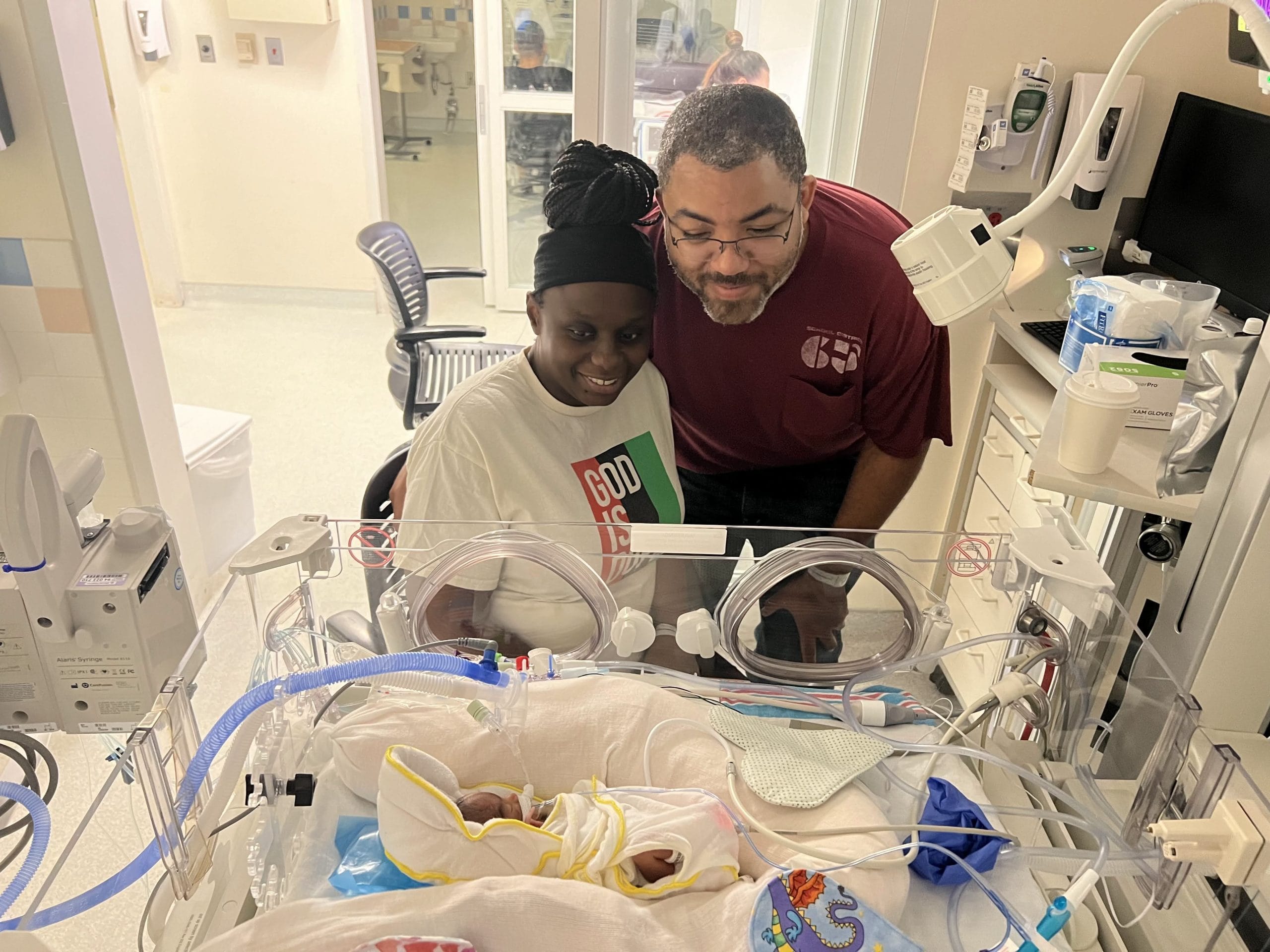
Family in hospital with newborn
Healthcare Provider Education

Donor milk is beneficial

Pasteurized donor milk is heat treated to destroy bacteria and viruses. Even after pasteurization, many powerful immune factors that can protect against infection are retained.

Breastfeeding mothers produce immune factors that are tailor-made for their babies. Their bodies activate real-time antibodies that target bacteria and viruses in their environment. Milk Bank WGL donor mothers share these amazing local antibodies with recipient babies in the hospital and home setting. And by pooling milk from several donors, donor milk contains a diverse collection of antibodies.

Milk Bank WGL is also passionate about protein. We batch milk by developmental stage to capture the highest levels of protein and antibodies for our tiniest and most vulnerable patients. High protein milk collected from preterm mothers is batched and processed separately for very low birthweight infants in level III/IV NICUs.
Bioactive Human Milk FactorsMom’s MilkDonor MilkFormula
Human Milk Oligosaccharides100%100%0%
sIgA antibody100%70%0%
Lysozyme100%75%0%
Lactoferrin100%40%0%

Select immune factors in mom’s milk, pasteurized donor human milk, and formula (based on data from Tully, Jones, & Tully, 2001).

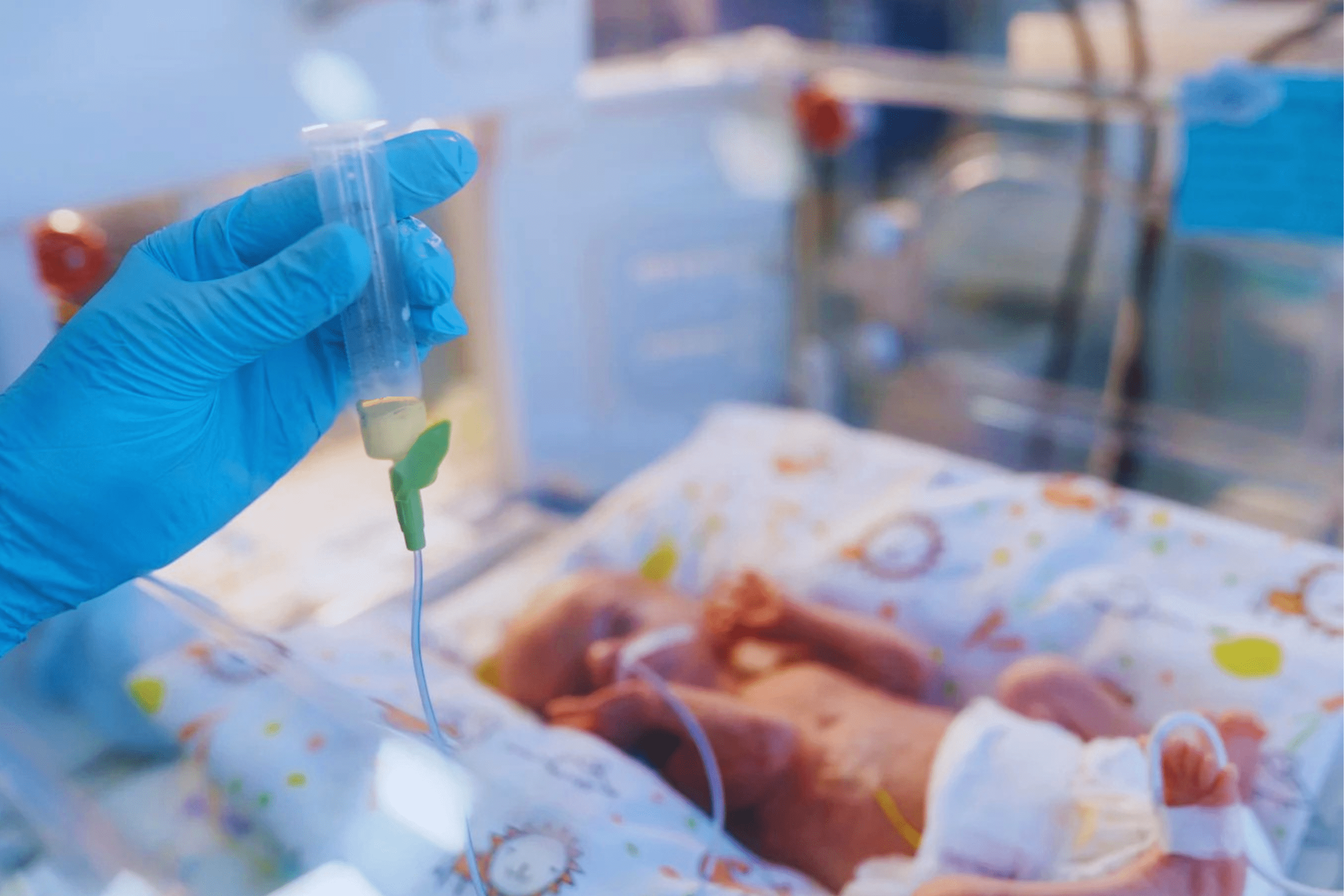
NICU Baby Feeding Tube
How To

Donor milk for your facility

Pasteurized donor human milk dispensed by Milk Bank WGL is delivered to hospitals for use in the NICU, Special Care Nursery, or Mother Baby Unit. To receive our hospital toolkit or to learn more about establishing a donor milk program at your hospital, please contact our Education office at education@milkbankwgl.org.

If you are a current hospital partner and would like to order donor milk, please call 847-262-5134 or email orders@milkbankwgl.org.

Preterm infants have fragile, underdeveloped gastrointestinal (GI) systems. A parent’s own milk reduces the risk of necrotizing enterocolitis (NEC), a dangerous GI condition associated with significant morbidity and mortality (Lucas & Cole, 1990; Meinzen Derr et al., 2009). When mother’s milk is unavailable, pasteurized donor human milk protects against NEC (Quigley & McGuire, 2014; Sisk et al., 2017).

Human milk also reduces the risk of sepsis (Ronnestad et al., 2005) and decreases the number of healthcare visits after NICU discharge (Johnson et al., 2019). The American Academy of Pediatrics endorses the use of pasteurized donor human milk for preterm infants when mother’s milk is unavailable (AAP, 2017).

How to provide donor milk for your NICU patients

Share the research

  • Provide neonatologists, nursing leadership, and dietitians with a literature review or summary that examines the relationship between exclusive human milk feedings and improved infant outcomes in the Neonatal Intensive Care Unit (NICU).
  • Present research findings at a Nutrition Committee meeting, Nursing Leadership meeting, Shared Governance Meeting, Grand Rounds, Resident Lecture, or any platform that will help you spread the word.

Engage physicians

  • Physician support is crucial to the development of a donor milk policy at your hospital. Talk to physicians about the importance of exclusive human milk feedings in the NICU.
  • Partner with a physician who understands the importance of using pasteurized donor human milk (PDHM) in the NICU and collaborate with him/her.

Collaborate with Milk Bank WGL

  • Contact us and request a “NICU Toolkit.” This packet contains a literature review, Sample Unit Guidelines, educational materials for healthcare providers, and resources.
  • Lactation Consultants, Nurses, and Physicians from Milk Bank WGL are available to speak. Contact us to arrange for a presentation at your hospital.

Create change

  • Create an Evidence-Based project that utilizes PDHM to improve infant outcomes in the NICU.
  • Create guidelines that outline the indication and use of PDHM in your unit.
  • Apply for a grant to fund your first year of a donor human milk program in your unit.

The use of donor milk on postpartum units is on the rise (Belfort et al., 2018). Indications for donor milk outside of the NICU may include, but are not limited to low supply, poor latch, hypoglycemia, weight loss, and hyperbilirubinemia (Sen et al., 2018). There may be reasons to consider donor milk that are based on the parents’ needs, such as contraindicated medications, separation, or HIV status.

Belfort et al. (2018) have demonstrated that exclusive breastfeeding rates are higher at discharge when donor milk is available for supplementation. Establishing a donor milk program on the postpartum unit increases parental feeding choices and may improve patient satisfaction.

Pasteurized donor human milk may be a great match for NICU graduates that are transitioning home. Donor milk may be used at home for many reasons, including failure to thrive, severe reflux, GI disorders, cardiac conditions, kidney or liver disease, spinal muscular atrophy, severe formula intolerance, or other congenital or acquired conditions.

In Illinois, some insurance plans may cover donor milk with specific indications and coverage rules. For more information, please review our Insurance Coverage Fact Sheet.

Other indications for outpatient milk include short term supplementation in the newborn period, maternal illness or separation, adoption, surrogacy, or low milk supply.

We are grateful to providers for referring donors to the milk bank. We rely on donors to help maintain a healthy donor milk supply for families in need. Milk donors are healthy, lactating women who have extra milk and want to help other babies in need. You can advise potential donors that they will be expected to:

  • Follow our donation guidelines.
  • Report medications and household illnesses to the Milk Bank.
  • Keep milk frozen during transport.
  • Make an initial donation of 100+ ounces.
Safety & Quality

Donor milk safety & quality

Milk Bank WGL operates a state-of-the-art manufacturing facility that is accredited by the Human Milk Banking Association of North America (HMBANA) and regulated by the Food and Drug Administration, Illinois Department of Public Health, and Elk Grove Village Health Department. Milk Bank WGL is also licensed as a Home Medical Provider by the Illinois Department of Financial & Professional Regulation.

Our Food Safety Plan targets potential biological, chemical, and physical hazards in each processing step. Certified Preventive Controls Qualified Individuals (PCQIs) identify the preventive controls, verifications, and validations to prevent the risk of hazard. Our Food Safety Plan is continuously revised to improve the safety and quality of the products we dispense.

Safety at a glance

  • Milk donors undergo a rigorous screening protocol that includes blood testing for HIV, HTLV, hepatitis B, hepatitis C, and syphilis.

  • Pasteurization destroys bacteria and viruses, including HIV and CMV.
  • Donor milk is tested for bacteria before and after pasteurization.

  • Donor milk is tested for drugs of abuse, including THC, PCP, opiates, benzodiazepines, cocaine, and amphetamine.
Materials

Donor milk flyer for hospitals

Per the Hospital Donor Milk Education Legislation (Public Act 103-0160), Illinois hospitals are required to provide information and instructional materials about how to donate milk to non-profit milk banks. Many potential milk donors learn about Milk Bank WGL after receiving this information from the hospital. We have including our version of the flyer for download and printing below.

Questions can be directed to our education team, at education@milkbankwgl.org.

How to Donate Milk download

English

Spanish

Healthcare FAQ

PDHM is safe, effective, and it saves lives. The clinical benefits of PDHM are well documented and the use of PDHM is endorsed by professional organizations and experts in the field.

  • Surgeon General: “Growing evidence supports the role of donated human milk in assisting infants with special needs, such as infants in newborn intensive care units who are unable to receive their own mothers’ milk, to achieve the best possible health outcome.”1
  • WHO/UNICEF: “Where it is not possible to breastfeed, the first alternative, if available, should be the use of human milk from other sources. Human milk banks should be made available in appropriate situations.”2
  •  American Academy of Family Physicians: “Banked pasteurized donor human milk has been found to be safe and nutritionally sound for babies who do not have access to their own mother’s milk.”3
  • AAP: “Banked human milk may be a suitable feeding alternative for infants whose mothers are unable or unwilling to provide their own milk. Human milk banks in North America adhere to national guidelines for quality control of screening and testing of donors and pasteurize all milk before distribution.”4

Milk Bank WGL ensures the safety of its pasteurized human donor milk (PDHM) by following screening, processing, and dispensing guidelines established by the Human Milk Banking Association of North America (HMBANA).

Mothers with extra milk and a desire to donate provide health and lifestyle histories, and undergo blood tests, similar to the screening process used at blood banks. Mothers are blood tested for HIV 1 & 2, Hepatitis B, Hepatitis C, HTLV 1 & 2, and Syphilis. Mothers also need to obtain medical clearance from their physician.

Donated milk is pasteurized, which destroys many bacteria and viruses, including HIV and CMV.5 Before the pasteurized milk is dispensed, bacteriological testing is done to ensure its safety. There has never been a reported case of HIV transmission with the use of PDHM in the United States.5

In 1911, Dr. Francis Denny of Boston’s Floating Hospital for Children created a milk bank to combat the “summer sickness” that so many babies of the time succumbed to. Summer sickness, or diarrheal disease, was a major cause of infant mortality caused by contaminated water and animal milk.

Dr. Denny’s milk bank provided infants with donor human milk in the absence of their own mother’s milk.6 Several milk banks developed around the country in the years that followed. In 1985, the Human Milk Banking Association of North America (HMBANA) was established to provide evidence-based guidelines and standards for the industry.

Today, there are over 30 operating HMBANA milk banks in the United States. These milk banks operate for the same reason they did 100 years ago, to improve infant outcomes and save lives.

Human milk is the nutritional gold standard for all infants, and especially premature infants. Human milk protects against NEC7-10, sepsis11, and is even correlated with a reduced length-of-stay in the NICU9. In contrast to formula, human milk is a dynamic fluid that contains a wealth of protective factors.

Antibodies, enzymes, growth factors, antioxidants, and oligosaccharides all serve important protective functions. This nutrient rich milk is easily digested by the premature infant. In many cases, the tiny premature gut simply cannot tolerate formula feedings.

Premature infants who are fed human milk experience fewer episodes of feeding intolerance12 and attain full enteral feedings earlier than their formula fed counterparts13. Mothers of premature infants know how important their milk is. However, many struggle to establish or maintain a full supply. In fact, preterm mothers are about 3 times more likely to have a low milk supply than term mothers14.

In the absence of mother’s milk, pasteurized donor human milk (PDHM) is needed. PDHM provides many of the same protections as mother’s milk. A recent systematic review and meta-analysis concluded that pasteurized donor human milk reduces the risk of NEC by 79%12. Exclusive human milk feedings, utilizing PDHM are an essential component of any NICU nutrition program.

“Substantial clinical evidence has placed HM [human milk] feeding and donor HM as a basic right for preterm infants…banked donor human milk should be promoted as a standard component of health care for premature infants.”15

When human milk is pasteurized via Holder method, the milk is heated to 62.5 degrees C for 30 minutes in a shaking water bath.  We know that several immunological factors become less active in this process, including lysozyme, lactoferrin, lactoperoxidase, and secretory immunoglobulin A.16   However, oligosaccharides are not affected by the pasteurization process.17

Oligosaccharides play very important prebiotic, immunomodulatory and antimicrobial roles in infants. Other immunologic and growth factors also retain activity after pasteurization, such as epidermal growth factor, and transforming growth factors (TGF). Some TGF subtypes have an anti-inflammatory effect upon fetal intestinal cells, which may help to decrease NEC.18